Tetouan
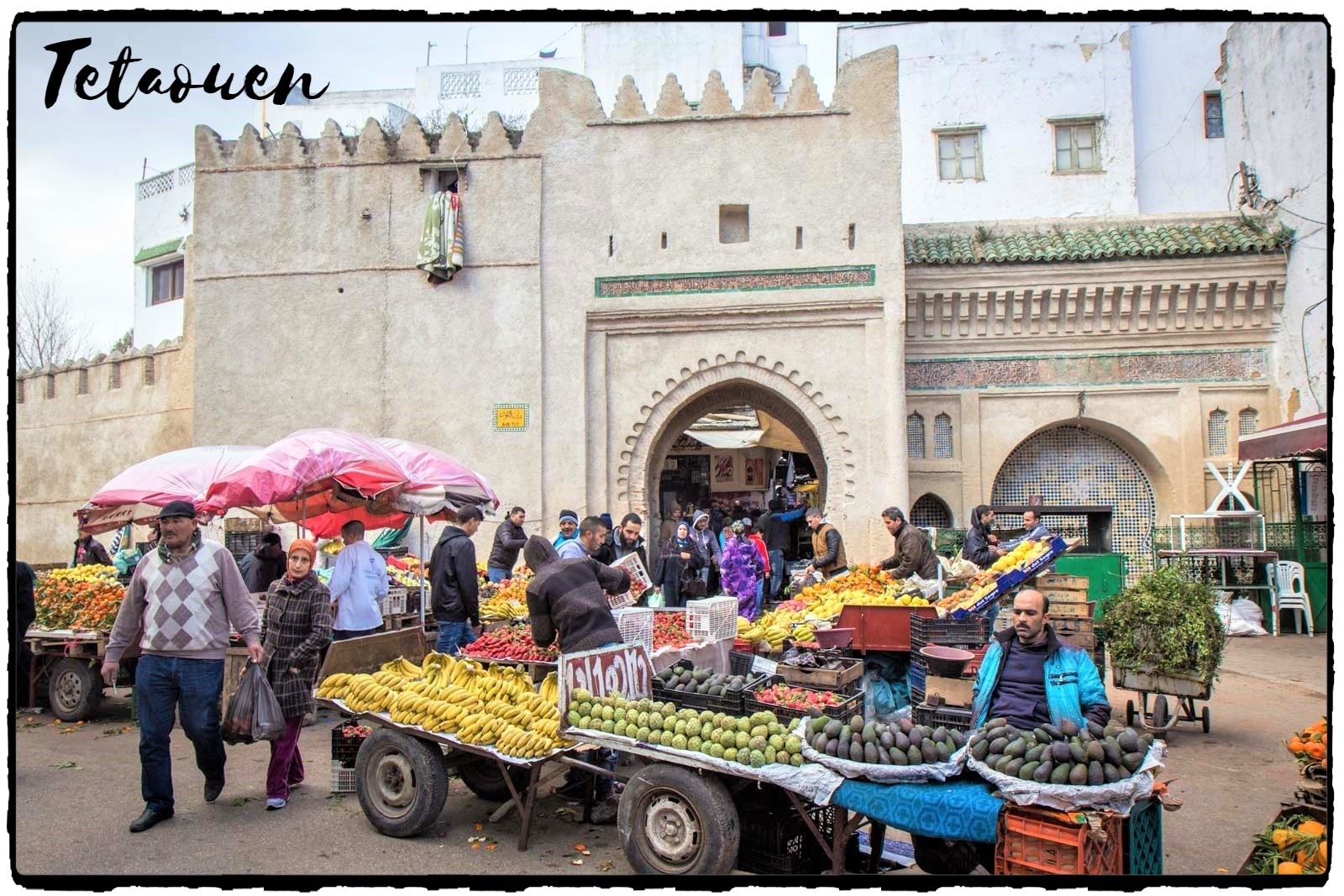
Tetouan Travel Guide
Tetouan, flanked on all sides by forest-clad limestone mountains, is arguably the jewel of Morocco’s Mediterranean coast, with Unesco-protected medina and a Spanish feel.A striking, Hispano-Moorish whitewashed town sitting in the foothills of the Rif, it has variously been called “the sister of Fez”, “little Jerusalem” and the “daughter of Granada”. It isn’t until you arrive that you appreciate the town’s location and realise how high the road has climbed. The town’s past importance as the capital of the Spanish zone, where the Spanish High Commissioner lived, is apparent in its imposing civic architecture. Lovely wrought-iron balconies beneath tall windows and curlicued grille-work are reminiscent of those in Seville.
Things to see in Tetouan
Tetouan was a busy trading centre even before the Spanish Protectorate (1912–56) added to its importance. At the beginning of the 16th century, the Jews and Muslims who arrived here from Spain practised piracy. They made slaves of passengers and crews, then extracted fabulous ransoms. Ships of all nationalities were attacked, but Spanish vessels suffered particularly badly. Philip II blockaded Tetouan’s port on the River Martil, leading to a decline in the city’s fortunes. Later, under Moulay Ismail the town’s economy prospered again.Nowadays, Tetouan is a bustling town, its energetic character stemming perhaps from its history as the focus of political resistance in the Rif. It was here, in 1954, that a rally of 30,000 tribesmen protested against the deposition of Sultan Mohammed V.
A walk through the Ville Nouvelle
Like all Moroccan cities, Tangier consists of a walled medina, or old town, as well as a modern quarter built during the Protectorate, called the ville nouvelle (new town). At the centre of the ville nouvelle is the Place de France and the tree-lined Boulevard Pasteur, with its cafés and restaurants, banks and travel agencies. A terrace at the end of Boulevard Pasteur. has a fine view of the harbour; in the evenings it is a favourite meeting-place for tourists and locals alike.Off the Boulevard Pasteur, on the Rue Magellan, is Villa Muniria, where William Burroughs wrote Naked Lunch. Rue de la Liberté (Zankat el Houria), the site of the elegant El Minzah Hotel, leads down to the old marketplace of the Grand Socco. In the Institut Français, opposite the Minzah, is the Galerie Delacroix.
Just off Rue de la Liberté, on Rue d’Angleterre, is a large white villa, formerly the British Consulate, which houses the Musée d’Art Contemporain de Tanger, showing works by contemporary Moroccan painters. Also on Rue d’Angleterre is the Anglican church of St Andrew, built in the late 19th century.
Easily accessible from Rue du Portugal is the Old American Legation, a building given to the Americans by Sultan Moulay Slimane, whose government was the first in the world to recognise American independence in 1776. It now houses a small museum on the city’s history. The Grand Socco is the terminus for city buses and has a taxi rank. There are city beaches, but those outside, accessible by car or taxi, are cleaner and quieter.
A Spanish-flavoured medina
Like most Moroccan towns, Tetouan is divided into the Ville Nouvelle and, in this case, the Spanish new town, or “ensanche”, whose wide boulevards and grand buildings have been restored – and the medina, which also retains a strong Spanish flavour and is listed as a Unesco World Heritage Site.In the medina, Place Hassan II is the location of the royal palace, which was built on the site of the old Caliphate palace. It also has a sweep of old market buildings that look distinctly Andalusian, but more interesting is some of the older domestic architecture. The large old mansions at the lower end of the mellah at the foot of Rue Luneta are in a state of dilapidation, but even so, the intricate enamelled tiling and fancy wrought-iron work decorating their exteriors demonstrate the difference between Spanish and Moroccan domestic architecture; on Moroccan houses adornment is all internal.
Souks galore
Visiting Moroccans interested in buying cheap electrical goods and inexpensive clothing head for the Souk Nador in the west of the town. The souks within the medina running off an attractive, trellis-covered street, entered through the Bab el Rouah on Place Hassan II, are more geared towards tourists, but the Souk el Houts (“fish market”) behind the Spanish Consulate remains local in character.