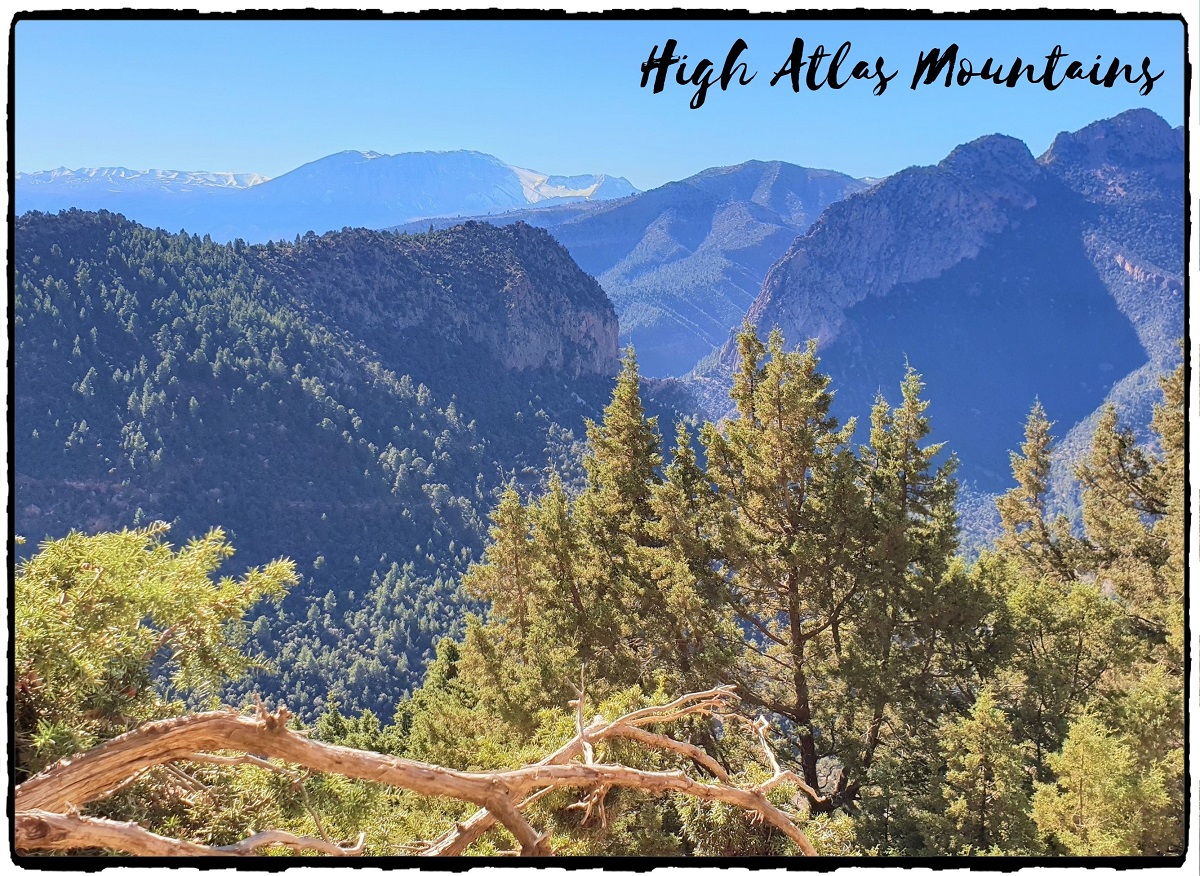
High Atlas Mountains
High Atlas Mountains Travel Guide
An exploration of Morocco's High Atlas Mountains includes treks up and around Mount Toubkal, the spectacular Tizi n'Tichka Pass, and Kasbah Aït Benhaddou which was featured in films such as Gladiator. Just an hour from Marrakech is the monumental High Atlas mountain range (450 miles long with summits over 4,000 metres/13,100ft) and, though most come to trek for several days, a day trip is enough to give a tantalizing snapshot. Life in this sublimely beautiful region has changed very little in centuries. With many of the most beautiful and culturally-interesting places in Morocco being inaccessible by car, trekking and walking are often the best ways to experience what many feel is the true Morocco. In these regions you are rewarded by an unhurried pace, can visit places untouched by the modern world, spend time with local people and see some of the most spectacular scenery in the country. The Tizi n’Test (may be closed in winter) is a dramatic route through the Atlas Mountains from Marrakech to the walled city of Taroudant. Without stops, the 222km (138 miles) takes about five hours, passing Berber villages, kasbahs and fine landscapes.
Things to see in the High Atlas Mountains
Asni
Shimmering in haze beyond the pink walls of Marrakech, long flecks of snow barely 60km (38 miles) away brush the rugged profile of the southern horizon. This is the Toubkal massif, the craggy mass of rocky peaks and deep valleys that contains the highest summits of the Atlas chain. Roads teeming with people and domestic animals, scooters and lorries belching diesel fumes, cross the hot Haouz plain to Asni, where there is an important Saturday souk, which though mainly a traditional local market for livestock and food, now also sells carpets, the ubiquitous fossils and other local trinkets. There are a few basic hotels and restaurants in Asni, but most people choose to stay in Imlil. A turning to the right before the market leads up to Moulay Brahim and the Kik Plateau.
The charming mountain village of Imlil
Imlil has several good cheap places to stay, a scattering of restaurants and lots of souvenir shops, selling carpets, fossils and jewellery. Thousands flock here in spring and early summer to climb Mount Toubkal and trek in the foothills around. There is also a Bureau des Guides in the village (just opposite the car park), recommended for first-time visitors. Trekking companies are another option and deal with all the logistical problems of organising porters, provisions and accommodation.
Mount Toubkal climbs and treks
For a mountain of this height and accessibility to have had its first recorded ascent (by a French party under the Marquis de Segonzac) as late as 1923 testifies to the tribal fortress mentality maintained by local people well into the 20th century. Visitors also go hiking round the district – there are 5–10-day circular tours – the “Toubkal Circuit” – staying overnight in remote huts, Berber outposts and sometimes open-air bivouacs. The mountain can usually be climbed in two days – the first day reaching the CAF Toubkal Refuge (previously called the Neltner Hut) at 3,207 metres (10,522ft), which is about 7 hours from Imlil, and reaching the summit (5 hours) and returning to Imlil (5 hours) on the second day. A lot of people include the ascent as part of longer treks. Note: the ascent can only be made when the snows have melted, between the months of May and October.
Dramatic views from the Tizi n'Tichka Pass
The Tizi n’Tichka Pass, which reaches a height of 2,092m (6,860ft) above sea level, offers fabulous views of the region, but be warned that the way through the pass entails a lengthy series of hairpin bends. At the summit of the pass a small restaurant has panoramic views southwards across the Souss Valley, with the ridge of the Anti-Atlas Mountains rising majestically above the haze. On the far side of the pass the road descends to join Highway N10. From the junction it is an easy drive to the city of Taroudant.
The walled city of Taroudant
Taroudant, the ‘Grandmother of Marrakech’, 225km (140 miles) from Marrakech, is one of Morocco’s more easy-going destinations. Surrounded by olive groves, citrus orchards and green fields, watered with the melting snows of the High Atlas, it is at the commercial hub of the Souss Valley.At a time when all coastal towns were open to naval attack, Taroudant’s inland location and high walls made it the natural choice as the region’s capital. Its impressive fortifications, built by the Saadians in the 16th century and in good repair, are the town’s most striking attraction. Within the walls, the dusty squares and shady souks offer great shopping opportunities for carpets, leather goods and Berber jewellery.The 19th-century palace in the kasbah is now a hotel, the Palais Salam, with comfortable rooms around several intimate courtyards. The Gazelle d’Or, just outside the walls of Taroudant, is one of the most exclusive hotels in Morocco.
Tizi n'Tichka Pass
Tizi n'Tichka Pass The Tizi n’Tichka Pass (also known as the N9, linking Marrakech with Ouarzazate) is the highest, most spectacular paved mountain pass in Morocco. Reaching 2,260m (7,400ft), the road snakes through the verdant foothills and pisé villages of the High Atlas, before a series of hairpin bends takes you to the summit of the pass. The landscape then changes, with arid peaks, rocky outcrops and ksour (fortified villages) filling the pre-Saharan landscape.
Kasbah Aït Benhaddou
Off the Tizi n'Tichka pass, about 20km (13 miles) before Ouarzazate, is a short side road leading to the Kasbah Aït Benhaddou, probably the most celebrated, filmed and photographed kasbah in Morocco. Featured in numerous films (including Lawrence of Arabia, The Sheltering Sky and Gladiator), it is the best-preserved kasbah in Morocco and has 10 families still inhabiting it. Today, many of the residents of this Unesco World Heritage Site are happy to show you around their homes and recount stories of their filming experiences.Access to the kasbah from the road is through the small modern town of shops, restaurants and auberges that have sprung up to service the stream of visitors. Stepping stones have replaced the mule rides to cross the Mellah River. The kasbah is really a town of many smaller kasbahs, all built from the same deep-red earth and often with intricate details carved into their walls. The huge gate is not part of the original design, but a film fantasy built for Romancing the Stone so that Michael Douglas could drive a plane through it.